Diversity is about recognising the multitude of characteristics we all hold. It encompasses the dimensions of gender, ethnicity, religion, disability, and sexuality. Inclusion relates to the ability to leverage these traits by enabling the participation of all. And while the international development sector frequently promotes these values through its work, the limi evidence that is available suggests the leadership teams are rarely as diverse as the target beneficiaries of their work.
Take gender: while the proportion of gender-focused official development assistance increasing from 27 percent in 2011 to 42 percent in 2021 – the proportion of women holding senior leadership positions in aid organisations still lags behind. For instance, in the US, women make up 75% of the not-for-profit workforce, but only 43% of CEOs. This is also the conclusion that UNWomen has reached, as they found that in the UN System women tend to dominate junior positions, but account for a much smaller share of senior leadership.
From our experience in the sector, a lack of racial diversity in senior leadership positions is also a common problem. A recent (2022) damming report by the UK House of Commons, Racism in the Aid Sector,
“Racism manifests in the very structure of international aid; the sector still reflects the power relationships of colonialism.”
– Page 3, House of Commons International Development committee
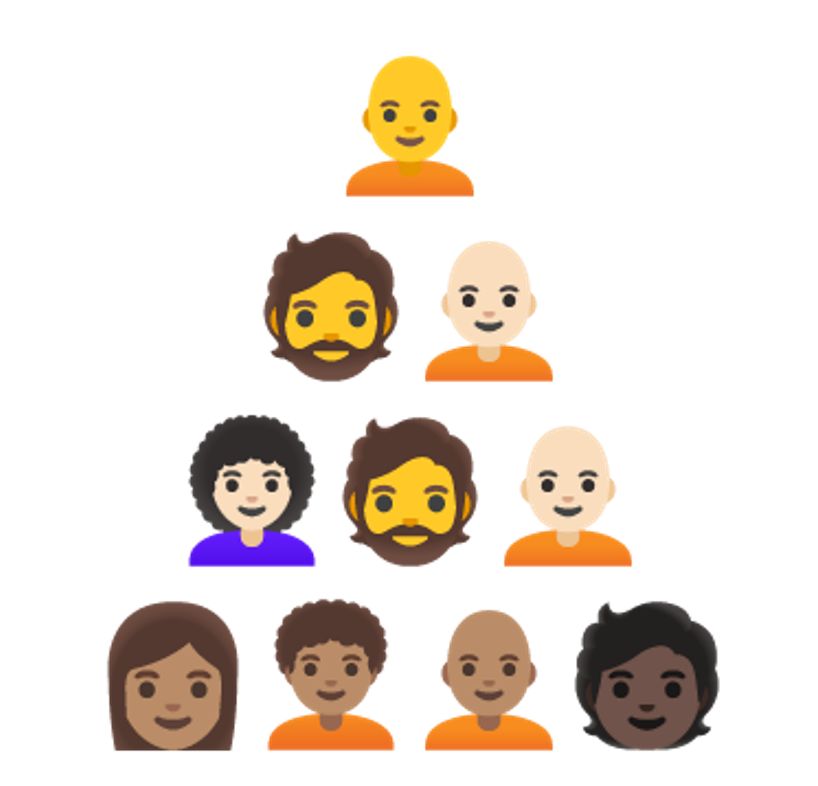
While over the past years, there has finally been a global reckoning with not only the need for diversity with respect to leadership in organisations, but more importantly its benefit, many of the organisations charged with delivering these programs still have leadership that look something like this:
By providing evidence through our Aid Diversity Index and therefore shining light on the issue, we sincerely hope the analysis can be used for critical reflection and to highlight opportunities where organisations and the sector can improve . Importantly this means moving beyond tokenism, such as merely tweeting about #IWD2023 #blacklivesmatter and #diversity.
We also hope that it can be used by donor governments, philanthropic foundations, and others to ensure that funding is directed to where it can best support change, rather than continuing to underpin unequal power structures that perpetuate inequality, poverty and injustice – the very structures the international development sector should be working to improve.
 Token Free Development